If you want me to correct your image for $2, please let me know at
For two years, I looked at AI-generated images and tried to understand how I could use this technology. Over time, I realized that the uniformity of AI images irritated me, but their quality was clearly superior to DAZ Studio renderings. I set a goal: to find a way to improve the quality of 3D rendering in AI, to do re-rendering.
At the end of 2025, I got my first result using the FLUX.1 model, which I liked. With the release of the FLUX.2 model, the result became even better. I continue to study this technology to achieve better results. And I still use Photoshop to combine different images into one.
If you want to do the re-rendering yourself, here's my process: ComfyUI + Flux.2 + img2img process + LORAs for correcting body parts.
Below you will see the original image. To view the re-rendered version, hover your mouse cursor over the image or click on it with your mouse or finger.
🠛 The kitchen seemed bare to me, so I asked for more details. I didn't specify what needed to be added or where; that would have taken more time. The model herself decided which items were appropriate for the kitchen. See full size ♂️
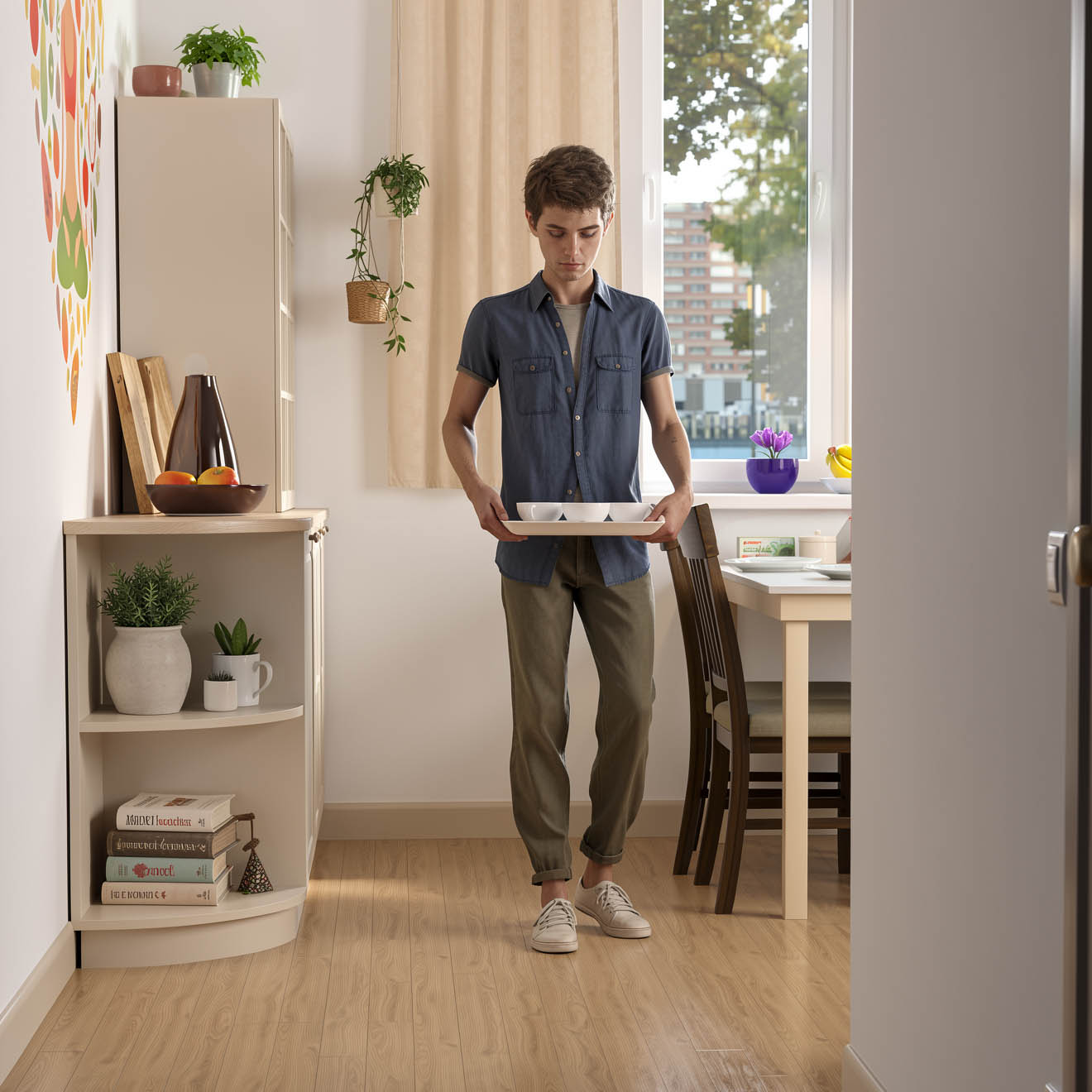

🠛 Re-rendering can remove copyright. I started overlaying the caption after processing it in AI. See full size ♂️


On the first page, you'll see re-rendered images for the novella "Saving Romeo and Juliet." On the second page, you'll see my first attempts at re-rendering other people's images. My process correctly preserves the original image. Sometimes AI alters facial features. In these cases, I use Photoshop to reduce the AI interference.
An added bonus: re-rendering can enlarge an image. All my images on this page are upscaled from 1080 px (in DAZ Studio) to 1920 px (AI). This significantly adds sharpness and detail to the image. However, it's still best to render directly to the desired size in DAZ Studio.
Further re-rendering up to 8000 px on the long side is also possible, adding detail. However, that's a different process and not re-rendering.
🠛 I replaced the background to see an alternative shot. See full size ♂️

🠛 For the woman on the left, I fixed the visible polygon breaks created by Daz Studio. For the woman on the right, I had to reduce the AI interference in the facial features. See full size ♂️


🠛 I can control the strength of the skin texture. in AI I create two generations: a weak texture and a strong texture. Then, in Photoshop, I create the combinations I need. See full size ♂️


🠛 To enhance the realism of the vulva, I use LORA trained for this task. See full size ♂️


🠛 Here, I added some moisture to the vulva because it was mentioned in the script. Then I applied a LORA for the vulva and another LORA for the anus. In total, about 20 AI generations were done to obtain three image fragments, which I merged in Photoshop. See full size ♂️


🠛 I filled the empty shelf with books and was happy. See full size ♂️

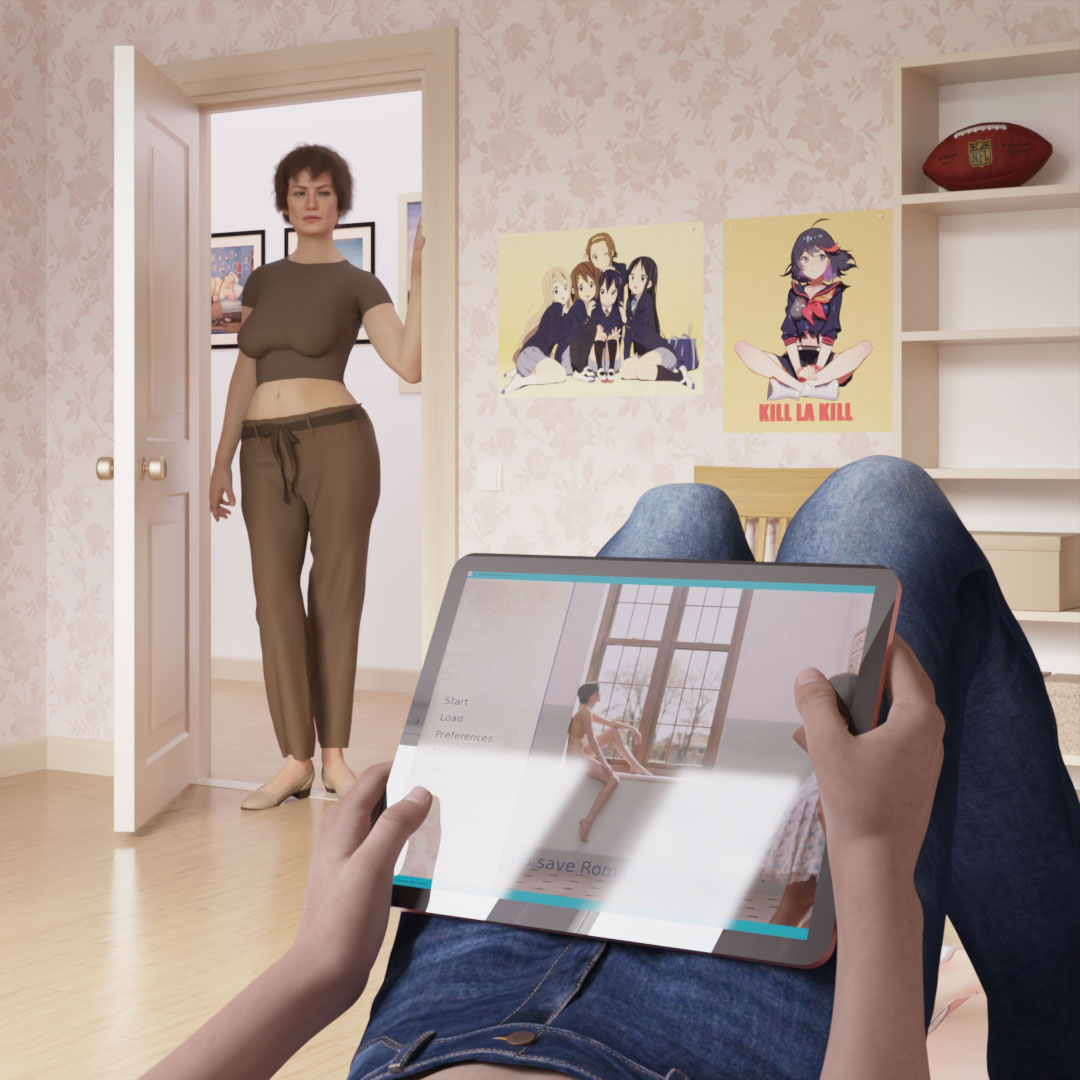
🠛 Upscaling from 1080 to 1920 pixels increases the amount of detail. See full size ♂️


🠛 The labia were difficult to work with. Golden Palace for Daz has a poorly shaped genitalia for this pose. The second difficulty is that the AI doesn't understand the genitals well when viewed from the side. I had to do over 10 generations in AI before I got something workable in Photoshop. The wetness was done separately in AI. Then I combined the dry and wet vulvas. See full size ♂️


🠛 I just noticed the poor work on the guy's neck. I wasn't paying attention, because I was working on it in Photoshop. See full size ♂️


🠛 I added folds to the bedspread. I created two leather texture variations and combined them in Photoshop. See full size ♂️